


Agile Scrum Framework and User Stories: Writing Effective User Stories With Gherkin Acceptance Criteria and Leading Scrum Ceremonies

Advertisement
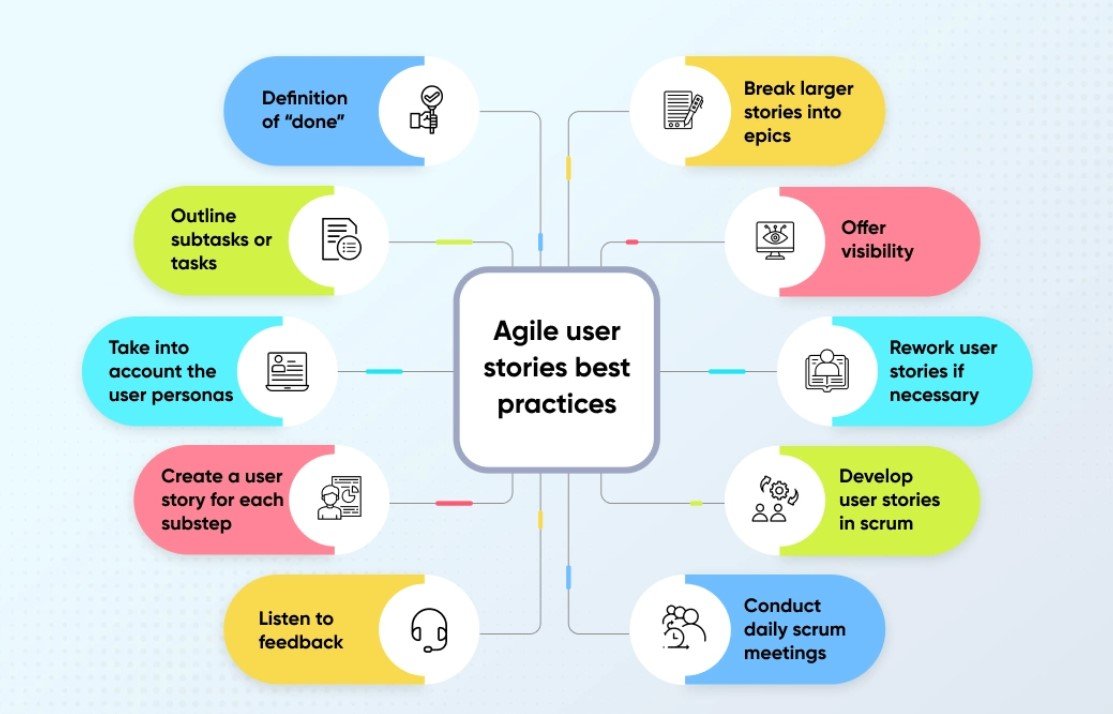
Agile Scrum has become a practical delivery model for teams that need to ship value quickly while staying responsive to changing requirements. However, Scrum only works well when two things are consistently strong. The first is the quality of the work items flowing through the backlog, especially User Stories. The second is the discipline of Scrum ceremonies, which keep the team aligned, remove blockers, and create a reliable cadence of delivery. When teams struggle with Scrum, the root cause is often unclear stories, weak acceptance criteria, or ceremonies that feel like routine meetings instead of purposeful working sessions.
This article explains how to write effective User Stories with Gherkin-style acceptance criteria and how to run core Scrum ceremonies in a way that supports clarity, speed, and shared accountability.
Understanding Scrum Roles, Artefacts, and Flow
Scrum is built around a small set of roles and artefacts that work together. The Product Owner owns product value and backlog priority. The Scrum Master protects the process and helps the team improve. The Developers build and validate the increment. The key artefacts include the Product Backlog, Sprint Backlog, and the Increment, supported by a clear Definition of Done.
A good way to view Scrum is as a flow system. Items enter the backlog as ideas, become refined into clear stories, move into a Sprint, and emerge as a tested increment. When items are vague, the system creates waste through rework, unplanned scope, or constant clarifications. Many practitioners strengthen this end-to-end view through structured learning such as business analyst classes in chennai, where writing and validating requirements is treated as a delivery skill rather than a documentation task.
Writing Effective User Stories That Drive Delivery
A User Story should express value, context, and intent in a compact format. The commonly used template is:
As a [user]
I want [capability]
So that [benefit]
This structure works only when each part is meaningful. “As a user” should identify a real persona or role, not a generic label. “I want” should describe a behaviour or capability, not an implementation detail. “So that” should explain the business outcome, which helps the team make better design decisions.
Key qualities of strong User Stories
- Independent: Can be built without heavy dependence on unfinished work
- Negotiable: Leaves room for the team to propose solutions
- Valuable: Delivers clear benefit to a user or stakeholder
- Estimable: Has enough clarity to size and plan
- Small: Fits within a Sprint with minimal risk
- Testable: Can be verified objectively
When a story is too large, split it by workflow step, user segment, business rule, or data variation. A simple example is splitting “checkout” into “add to cart,” “apply coupon,” and “payment confirmation,” each with its own acceptance criteria.
Acceptance Criteria in Gherkin Format
Acceptance criteria translate intent into verifiable outcomes. They reduce ambiguity and help developers, testers, and stakeholders agree on what “done” means. Gherkin is a popular format because it is readable and structured, making it useful for both manual and automated testing.
Gherkin structure
- Given (context or precondition)
- When (action taken by the user or system)
- Then (expected outcome)
Optional clauses include And and But for additional steps.
Example User Story with Gherkin criteria
Story: As a returning customer, I want to log in with email and password so that I can access my saved addresses.
Acceptance Criteria:
- Given a registered user exists with a verified email
When the user enters a valid email and password
Then the user is logged in and redirected to the account page - Given a registered user exists
When the user enters an invalid password three times
Then the account is temporarily locked and a reset link is offered - Given the user is on the login page
When the user submits an empty email field
Then an inline validation message is displayed
Good Gherkin criteria cover happy paths, edge cases, and negative scenarios without turning into a detailed test script. Keep them focused on observable behaviour and measurable outputs. Teams that practise this regularly reduce production defects because expectations are explicit before development begins.
Leading Scrum Ceremonies With Purpose
Scrum ceremonies are not administrative tasks. They are control points that keep delivery healthy.
Sprint Planning
Sprint Planning should answer two questions: what can be delivered and how it will be delivered. The Product Owner presents priority items and objectives. The team checks readiness, confirms acceptance criteria, and estimates. A strong Sprint Goal is outcome-based, not a list of tasks.
Daily Scrum
The Daily Scrum is a coordination meeting for developers. The best format is not a status round. Instead, focus on progress towards the Sprint Goal, identify blockers early, and adjust the plan. Keep it short, factual, and action-oriented.
Sprint Review
The Sprint Review is a product conversation, not a presentation. Demonstrate completed work, compare it to acceptance criteria, gather stakeholder feedback, and adapt the backlog. This is where the product direction stays real and grounded.
Retrospective
The Retrospective improves how the team works. Choose one or two improvement actions, assign ownership, and follow through. Small changes sustained over time matter more than big promises that disappear after the meeting.
Professionals who learn facilitation techniques and requirement clarity together, such as in business analyst classes in chennai, often become effective bridges between stakeholders and delivery teams, which strengthens ceremonies and reduces churn.
Conclusion
Agile Scrum succeeds when the backlog is clear and the cadence is disciplined. Effective User Stories describe real value, stay small enough to deliver, and remain testable. Gherkin acceptance criteria turn expectations into verifiable behaviour, supporting quality and reducing rework. Scrum ceremonies, when run with purpose, keep teams aligned on outcomes, surface risks early, and create continuous improvement.
When these elements work together, Scrum stops feeling like a set of meetings and becomes a practical system for predictable delivery and better products.
