


Mark Kelly Faces Pentagon Censure: Breaking News 2026

Advertisement
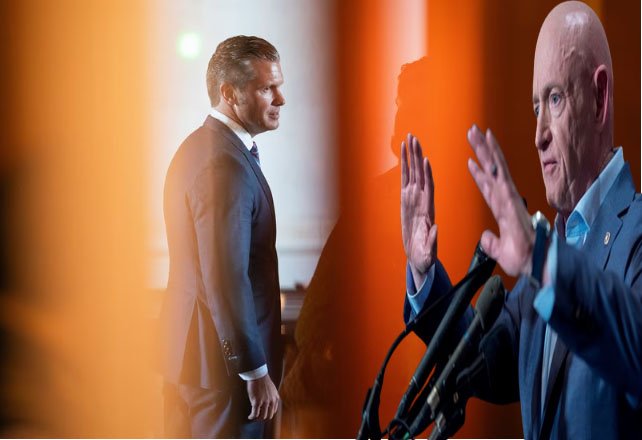
In a stunning development that has sent shockwaves through Washington, Senator Mark Kelly faces unprecedented Pentagon action that could dramatically impact his military retirement. The Arizona Democrat and retired Navy captain now confronts a formal censure from Defense Secretary Pete Hegseth, alongside proceedings that threaten to reduce his retirement rank and benefits. This explosive controversy stems from Mark Kelly’s participation in a November video addressing military personnel about constitutional duties. Moreover, the situation raises critical questions about free speech, military justice, and political retaliation in today’s polarized environment.
The Mark Kelly Controversy
The unfolding situation involving Senator Mark Kelly represents one of the most significant confrontations between the executive branch and a sitting senator with military credentials. Therefore, understanding the full context requires examining multiple dimensions of this complex issue.
On November 18, 2024, Mark Kelly joined five fellow Democratic lawmakers in releasing a 90-second video. The message reminded service members of their constitutional obligation to refuse unlawful orders. Consequently, this seemingly straightforward reminder triggered an aggressive response from the Trump administration and Pentagon leadership.
The Mark Kelly Military Retirement Cut Explained
Defense Secretary Hegseth initiated formal proceedings under 10 U.S.C. § 1370(f) that could result in a mark kelly military retirement cut. Specifically, these proceedings target Kelly’s retired rank, which directly affects his pension benefits. Additionally, the action includes a formal letter of censure accusing him of conduct prejudicial to military discipline.
The potential financial impact remains substantial. Furthermore, reducing a retired officer’s rank typically results in significant decreases in monthly retirement payments. However, Mark Kelly has vowed to fight these proceedings vigorously, calling them politically motivated attacks on free speech.
“If Pete Hegseth thinks he can intimidate me with threats to demote me or prosecute me, he still doesn’t get it. I will fight this with everything I’ve got.”
— Senator Mark Kelly
Legal Grounds for the Censure Action
The Pentagon’s censure letter cites Articles 133 and 134 of the Uniform Code of Military Justice. Nevertheless, legal experts question whether these provisions apply to a senator’s protected speech. Indeed, the First Amendment typically shields elected officials from such military jurisdiction.
Hegseth’s letter specifically accuses Senator Mark Kelly of undermining the chain of command. It also claims his statements created confusion about military duty. However, critics argue that reminding troops about existing legal obligations cannot constitute sedition or misconduct.
Senator Mark Kelly’s Distinguished Service Record
Before entering politics, Mark Kelly served with distinction as a Navy captain and NASA astronaut. His military career spanned over 25 years, including 39 combat missions during Operation Desert Storm. Subsequently, he commanded space shuttle missions and contributed significantly to America’s space program.
This extensive service record makes the current controversy particularly striking. After all, few senators possess Kelly’s depth of military experience and understanding of operational command structures. Therefore, his perspective on lawful orders carries considerable weight and credibility.
The Constitutional Duty Question
Military law explicitly requires service members to disobey unlawful orders. In fact, the Uniform Code of Military Justice makes this obligation clear. Consequently, Mark Kelly and his colleagues argue they simply reiterated existing legal requirements rather than encouraging insubordination.
Federal courts have already ruled that certain Trump administration military deployments violated the Posse Comitatus Act. Thus, the orders Kelly warned about may have actually been illegal, vindicating his concerns and statements.
Political Implications and Broader Context
The action against Senator Mark Kelly represents part of a broader pattern. President Trump previously accused the lawmakers of “seditious behavior” on social media. Moreover, he suggested such conduct could be “punishable by DEATH,” escalating the rhetoric dramatically.
This aggressive stance raises serious concerns about civil-military relations and democratic norms. Additionally, targeting a sitting senator through military administrative proceedings sets a troubling precedent. Many constitutional scholars view this as an attempt to silence legitimate political dissent.
Response from Fellow Lawmakers
Other participants in the November video include Senator Elissa Slotkin and Representatives Jason Crow, Chris Deluzio, Chrissy Houlahan, and Maggie Goodlander. However, only Mark Kelly faces Pentagon action because he remains subject to military jurisdiction as a retired officer receiving pension benefits.
Senator Slotkin and Mark Kelly established a legal defense fund in December 2024. This fund helps prepare for potential legal battles and demonstrates their commitment to fighting these proceedings. Furthermore, it signals their belief that the action violates constitutional protections.
What Happens Next in the Mark Kelly Case
The Pentagon has given Senator Mark Kelly 30 days to respond to the censure. Subsequently, the retirement grade determination process will take an additional 45 days. During this period, Kelly can present evidence and arguments defending his conduct.
Legal experts anticipate vigorous litigation if the Pentagon proceeds with rank reduction. Indeed, the case could ultimately reach federal courts, where judges will evaluate whether the action violates Kelly’s constitutional rights. Moreover, the outcome may establish important precedents for military retirees in public service.
Public and Political Reaction
Public opinion remains sharply divided along partisan lines. Democrats generally view the action as political retaliation and an assault on free speech. Conversely, some Republicans support the Pentagon’s stance, arguing that Mark Kelly overstepped appropriate bounds for a retired officer.
Civil liberties organizations have expressed alarm about the precedent this case could set. They argue that punishing retired military officers for political speech while serving in Congress threatens democratic governance. Additionally, veterans’ groups worry about the chilling effect on military retirees considering public service.
A Defining Moment for Civil-Military Relations
The controversy surrounding Senator Mark Kelly transcends individual personalities and political parties. Instead, it raises fundamental questions about the balance between military discipline and constitutional rights. Furthermore, it tests whether retired officers can fully participate in democratic governance without fear of retaliation.
As this situation develops, Americans across the political spectrum should pay close attention. The outcome will likely influence civil-military relations for years to come. Moreover, it may determine whether future military veterans feel free to serve in elected office and speak their minds on matters of national importance.
Mark Kelly has made clear his intention to fight these proceedings vigorously. His determination reflects not just personal interest but a broader commitment to protecting constitutional principles. Ultimately, this case will test whether political disagreements can justify using military administrative procedures against elected officials.
You can also read : Why the US government might shut down and what to know
